> ## Documentation Index
> Fetch the complete documentation index at: https://docs.wayak.io/llms.txt
> Use this file to discover all available pages before exploring further.
# Objects
> Define the core entities that make up your business domain
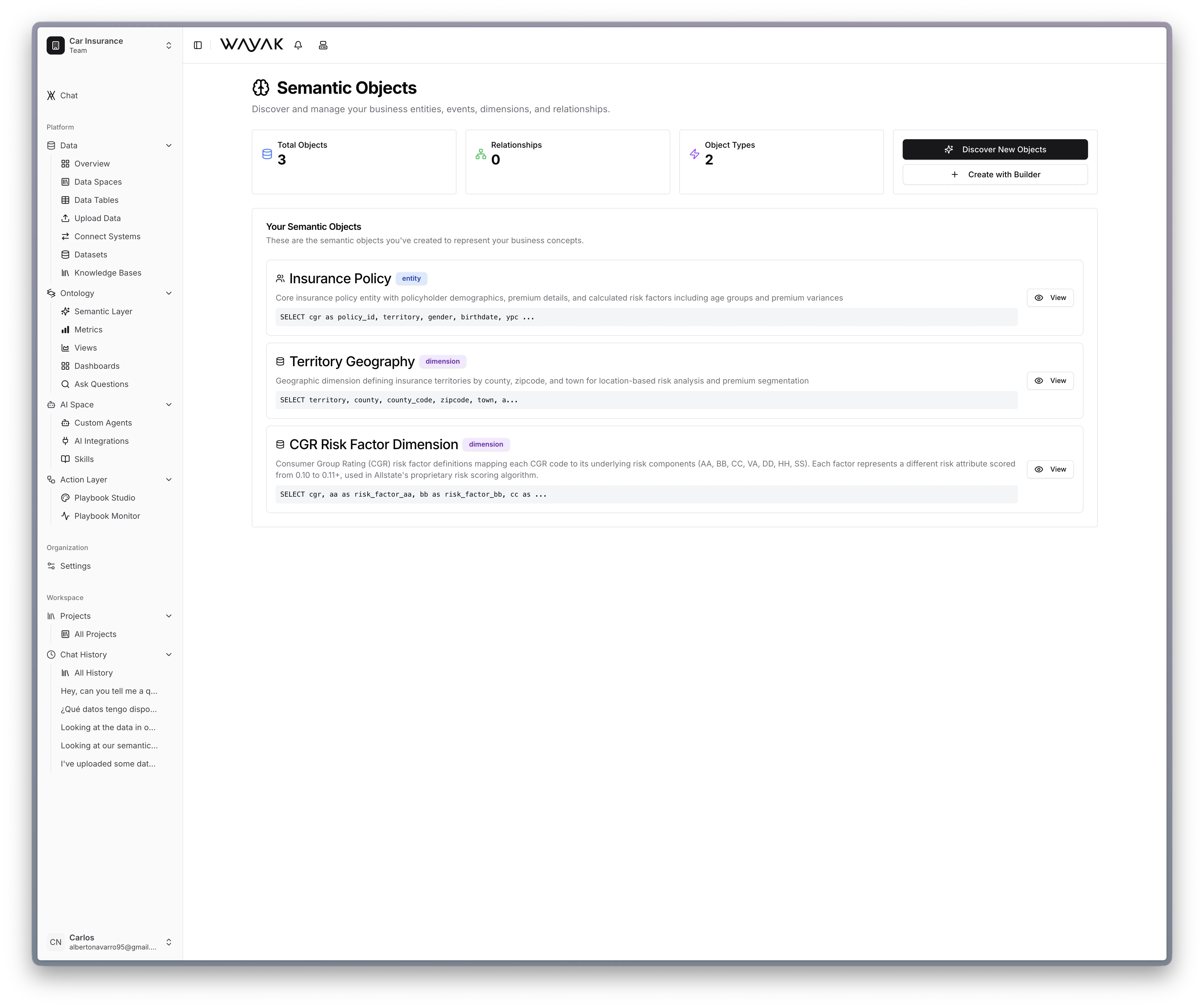
Objects are the fundamental building blocks of your ontology. They represent the real things in your business — customers, orders, products, employees, transactions, campaigns.
 ## What an object represents
An object maps to one or more tables in your data sources. It defines what a "thing" is in your business and how it's stored. For example:
| Object | Maps to | Description |
| -------- | ---------------- | ------------------------------------ |
| Customer | `accounts` table | A business or individual you sell to |
| Order | `orders` table | A completed purchase |
| Product | `products` table | Something you sell |
## Why objects matter
When someone asks "How many customers do we have?", the agent needs to know what "customer" means in your data. The object definition tells it exactly which table to query and what filters to apply.
Objects are the anchor point for everything else in the ontology — dimensions describe them, entities identify them, and metrics measure them.
## What an object represents
An object maps to one or more tables in your data sources. It defines what a "thing" is in your business and how it's stored. For example:
| Object | Maps to | Description |
| -------- | ---------------- | ------------------------------------ |
| Customer | `accounts` table | A business or individual you sell to |
| Order | `orders` table | A completed purchase |
| Product | `products` table | Something you sell |
## Why objects matter
When someone asks "How many customers do we have?", the agent needs to know what "customer" means in your data. The object definition tells it exactly which table to query and what filters to apply.
Objects are the anchor point for everything else in the ontology — dimensions describe them, entities identify them, and metrics measure them.