

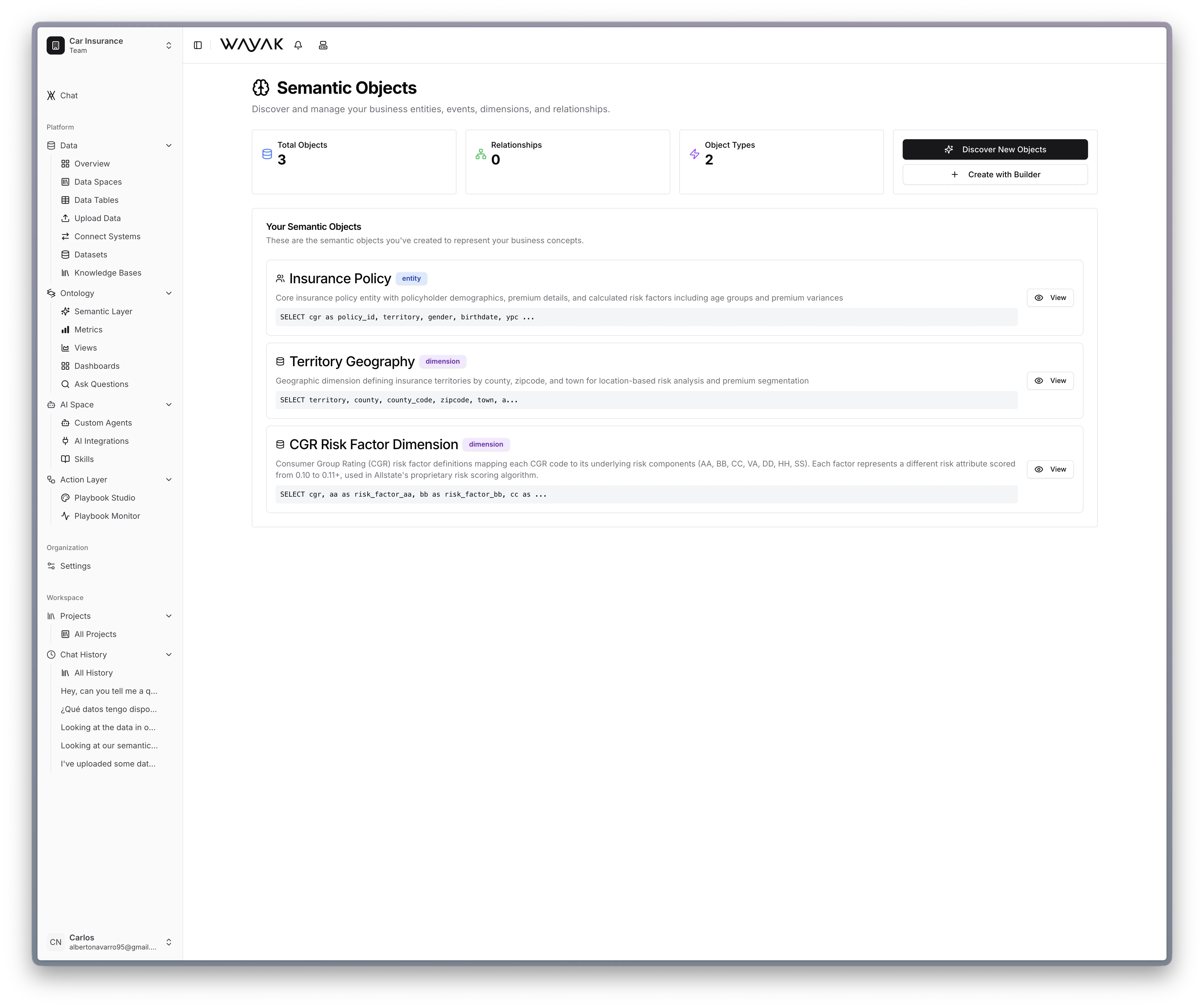
Define semantic objects — entities, dimensions, and relationships — in the ontology
Why you need one
Without an ontology
With an ontology
The agent answers with the same precision as your best analyst. It knows “revenue” means
SUM(amt_net_usd) WHERE txn_type = 'sale' and applies that consistently.The building blocks
The ontology is made up of six components that work together in a hierarchy:Objects
The core entities in your business — customers, orders, products, employees.
Dimensions
The attributes that describe and categorize your objects — region, status, tier.
Entities
Specific instances and how they’re identified and resolved across data sources.
Metrics
The calculations your team cares about — revenue, churn, conversion rate.
Views
Standalone charts and tables that visualize specific slices of your data.
Dashboards
Collections of views assembled into a single, shareable page.