

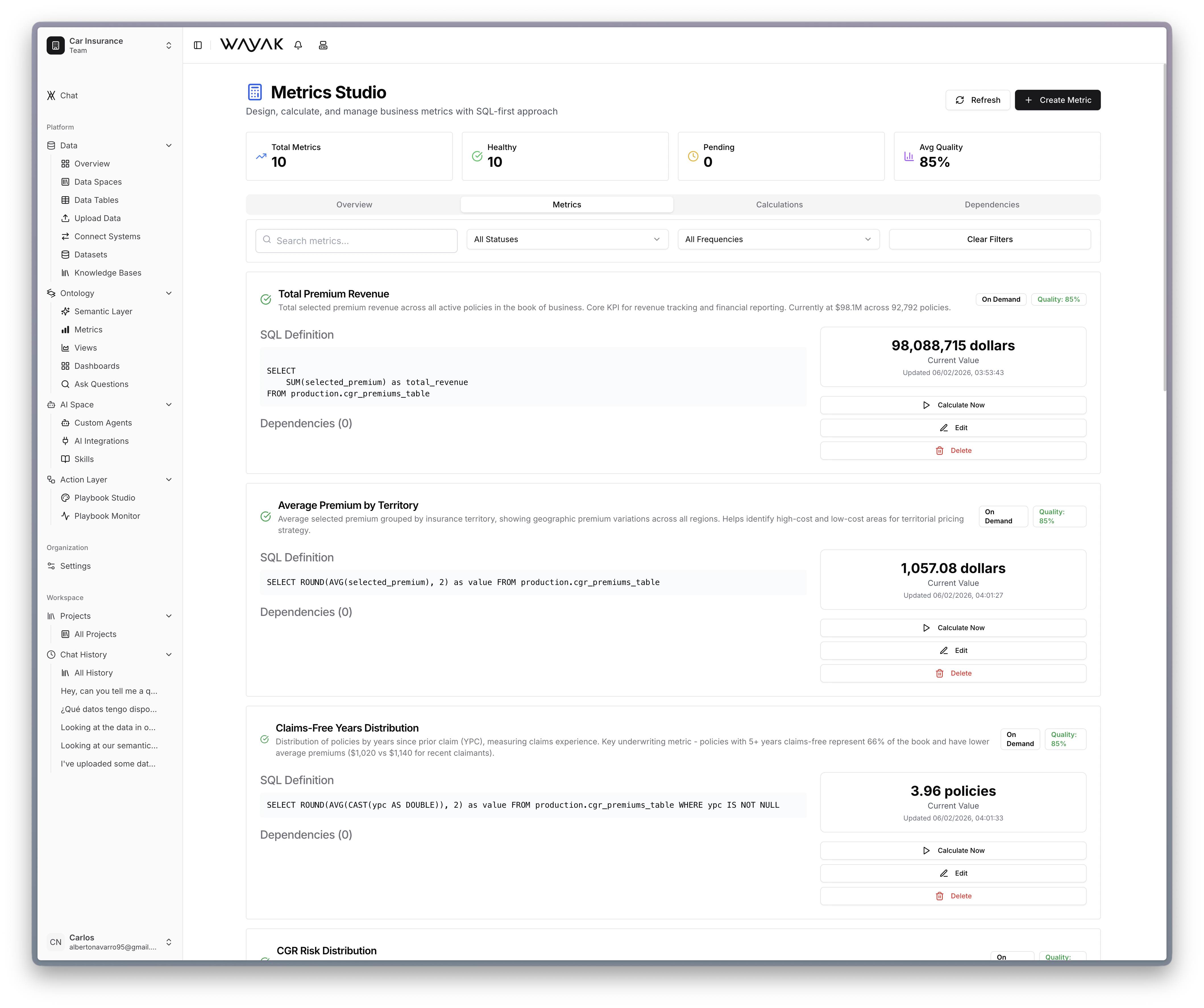
The Metrics Studio — define, calculate, and monitor business metrics with SQL
Why define metrics
Without defined metrics, the agent has to guess how to calculate “revenue.” It might sum the wrong column, miss a filter, or use a different aggregation than your team expects. Defined metrics eliminate that ambiguity. Every time someone asks about a metric, the agent uses the exact same formula. Same question, same answer, every time.Anatomy of a metric
A metric definition includes:Composing metrics
Metrics can build on each other. For example:- Revenue =
SUM(amount_usd) WHERE type = 'sale' - Cost =
SUM(amount_usd) WHERE type = 'expense' - Profit = Revenue - Cost
- Margin = Profit / Revenue
Metrics vs. dimensions
Metrics are what you measure. Dimensions are how you slice it. They work together:- “Revenue by region for last quarter”
- Revenue = metric
- Region = dimension
- Last quarter = time filter